Into Hidden Valleys
A Mission in the Mountains of Tibet (March 28, 2006)

Jack (the writer of what follows below) and I (“Eugene” in the story) recently reminisced about the unforgettable events of that day, working our way through Jack’s written account for reference, but adding quite a bit more in the way of context and detail to our experience. The podcast recording of our nearly one-hour conversation can be found here or directly below.
The morning of 28 March 2006 broke slowly in Nangqên, Tibet. The air was sharp and cold, slicing through even the thickest layers. We’d intended to get going early, but the sub-zero temperatures kept us curled deep in our sleeping bags until nearly 9:30 AM. This wasn’t a day for comfort though—we were on a mission.
My friend Eugene, a seasoned missionary, showed up at 10:00 AM carrying bread from the local bakery. It was a modest breakfast, but our thoughts were fixed on the journey ahead. We were meant to be a six-person team, but a minor motorcycle accident the previous day at a local orphanage had sidelined two of our members. Sarah, one of the World Race women had injured her knee, and my wife, Lana—already fighting off bronchitis—stayed behind to care for her together with Ishmael the Mexican missionary.
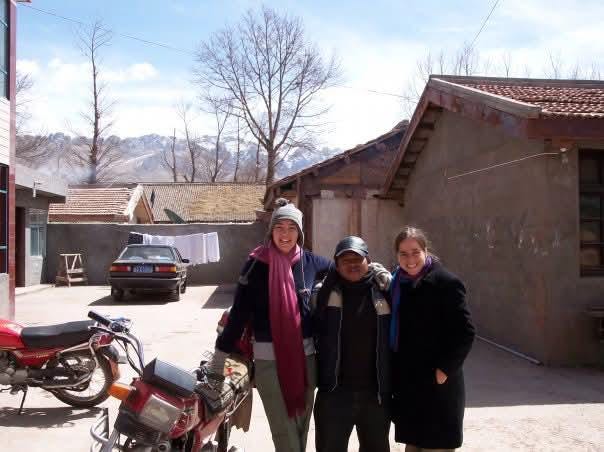
That left just three of us for the journey: Eugene, Tauna (our remaining World Race teammate), and me—Jacques.
We packed light, mounted our small 125cc motorcycles, and made our final checks. Just before we left, Lana came running toward me, a silver space blanket in hand. “Here,” she said, handing it to me, “you might need this.” I tucked it into my pack, not knowing how true her words would prove.
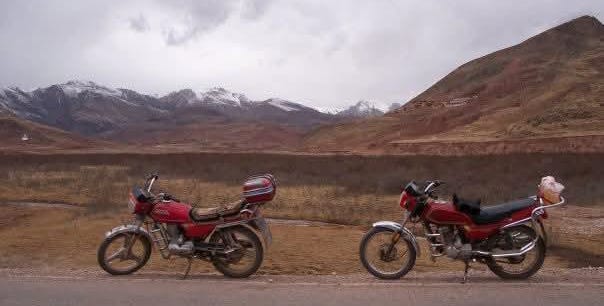
As we rode out into the mountains, the snow-draped peaks loomed above us like frozen giants. Our destination was a remote monastery—one Eugene had spotted on a map. It was deep in a hidden valley, unreached and isolated. Our mission: go, connect, and deliver Gospel tracts.
About an hour and a half into the ride, we reached a high mountain pass—4,800 meters above sea level. The wind was brutal and the air thin. From there, we had to turn off from the main road where only a narrow horse trail cut down into the valley below. No road signs. No guarantees. Just a path disappearing into a wilderness down below.
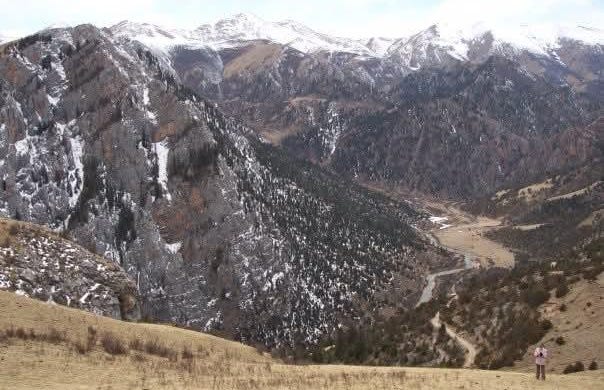
We started down, riding slow and steady. The trail was rough, narrow, and covered with loose rocks and gravel. Our 125cc city bikes, not built for terrain like this, struggled. We had a few close calls as the tires spun and skidded on the unstable surface.
After an hour and a half of descent, we reached the valley floor. A crystal-clear river greeted us. We stopped, ate lunch by its banks, and tried to soak in the beauty and silence around us.
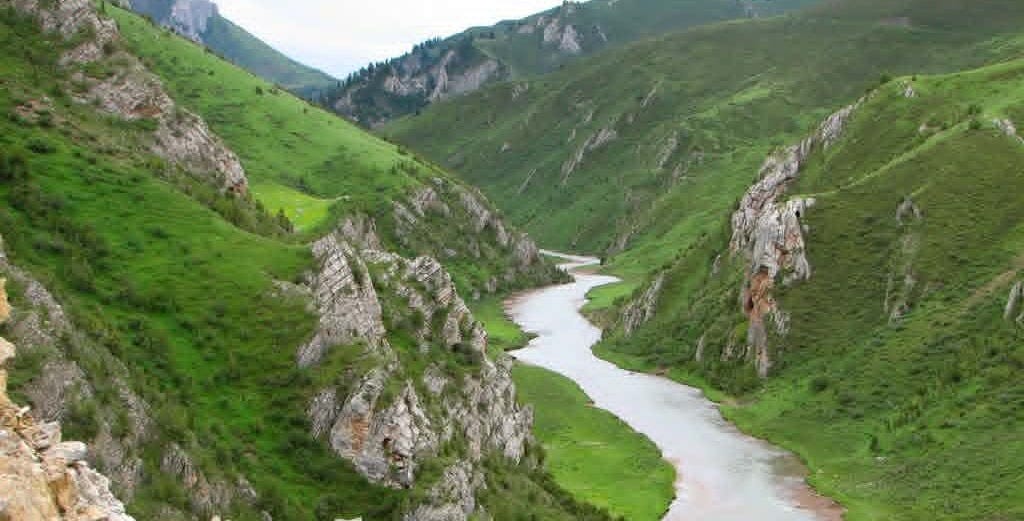
We tried to continue by bike along the riverbank, but it wasn’t long before the snow took over the path entirely. We pressed on by foot, trying to find another route—but the river widened, and the icy water blocked our path completely. There was no safe way forward.
Reluctantly, we turned back. And now came the hard part—climbing out of the valley.
Going up, everything felt steeper, more dangerous. The bikes groaned under the pressure. The cold bit into our hands. Gravel slipped beneath our tires, and every corner presented a new risk of sliding off the edges. We prayed silently with each turn, whispering petitions as the wheels gripped just enough to keep us from falling. To conserve the energy of the drivers—Eugene and myself—Tauna took turns riding as a passenger with each of us. Carrying an extra person made the bikes heavier and harder to control, but by switching off regularly, we avoided exhaustion and kept moving forward. It was a delicate balancing act between momentum and caution, strength and fatigue.
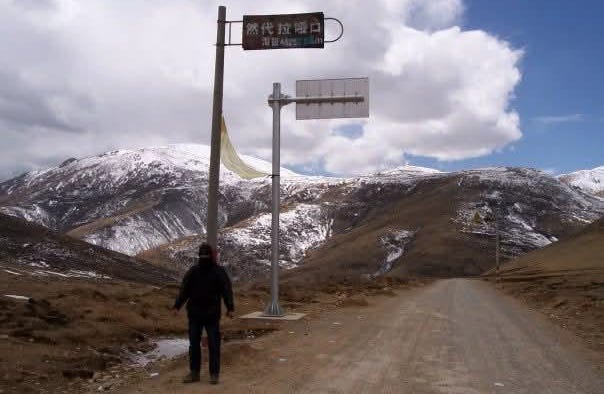
By 4:00 PM, we crested the ridge—relieved, exhausted, and still a long way from done. We checked the map again and noticed the Tibetan border not far ahead. We didn’t have permits to cross it, but curiosity pulled us onward. It looked like a 25-kilometer detour. It was closer to 40.
The dirt road had steep drops on one side, jagged cliffs on the other. No guardrails. The wind howled around us as we pressed on, unsure of what we would find.
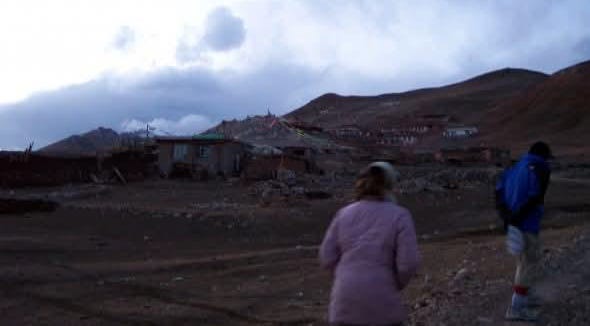
Then Eugene spotted something we did not expect—a dirt path veering off to the right, with a Monastery “Welcome” Gate visible from the road. On instinct, we followed it. It led us to another monastery, this one not even listed on the map.
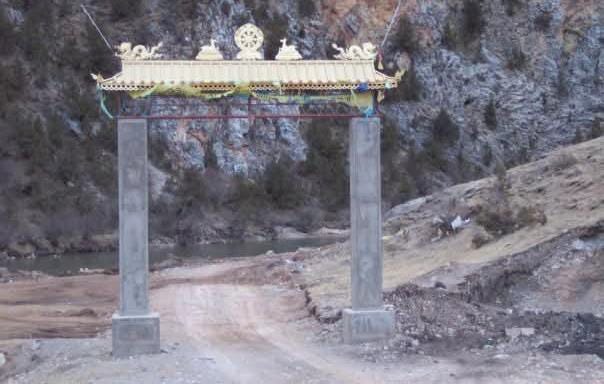
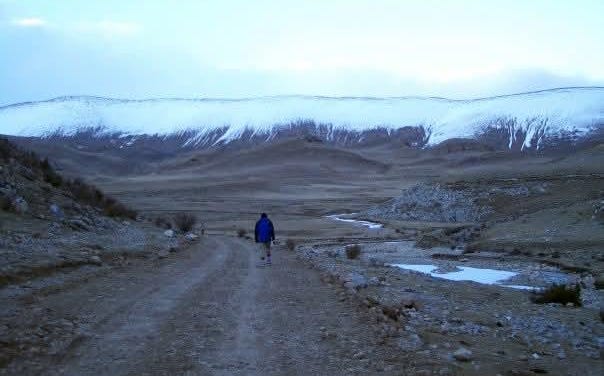
We parked the motorbikes and decided to continue on foot. The temperature was dropping fast. An icy stream flowed beside us, frozen on top but roaring underneath. Ahead of us stood a mountain not capped with snow—but crowned with solid ice.
And there, beneath that silent mountain, stood the monastery.
As we approached, we saw an immense stone structure—an 80-meter-long shrine built from generations of stacked rocks, wrapped in prayer flags. Monks and villagers walked clockwise around it, spinning prayer wheels and murmuring mantras. It was their ritual of kora—a form of spiritual purification meant to earn merit and wash away bad karma.
It was a sobering sight. These people were devout—hungry for meaning. Lost.
We walked slowly, but in the opposite direction—anti-clockwise—and approached the temple at the back of the monastery. By now, night had fallen. The temperature dropped below freezing.
As we neared the entrance, a few monks stepped forward, forming a silent barrier between us and their Temple. They didn’t speak, just stood there.
I looked at Eugene. He didn’t panic. In a low voice he said, “Walk around. Just look like you’re exploring.”
Tauna and I obeyed. We walked around the structure slowly, watching shadows shift as we moved. In the dark, we discreetly slipped small Gospel tracts into cracks in the walls and into the crevices of prayer wheels—tiny seeds, hidden in faith.
Ten minutes later, we regrouped and found that the monks had vanished. Only Eugene stood waiting. Then, we heard footsteps.
A young Tibetan, maybe 13 or 14 years old—approached. He looked up at us and said softly, “Come. Eat.”
He led us to a nearby home. Inside, warmth exploded around us. About twenty monks sat eating dinner, their laughter filling the air. They welcomed us with smiles and hand gestures, motioning for us to sit and join them.
An older monk sat next to Eugene and began speaking in Tibetan. Eugene, who already spoke fluent Chinese and Spanish, had recently been picking up the local language. The monk leaned in and asked in a hushed voice, “Are you… people who believe in Jesus?”
The room around us buzzed with laughter and noise. No one else noticed the conversation Eugene and his new friend was having.
Without fanfare, Eugene reached into his sleeve and slipped the man a packet of Gospel tracts. The monk received it carefully and tucked it under his robe. No words. Just a look. A silent understanding.
We stayed for dinner. Dried fruit, warm bread, meat and Tea. It was simple, warm, and served with open hearts. They invited us to spend the night—but we knew the rest of the team were waiting for us back in town.
At 21:15, we stepped back into the freezing night air, now -10°C. Our breath rose like steam as we walked toward the bikes. The young boy guided us back towards our motorbikes. As he greeted us farewell, he said with quiet sincerity:
“Please come back one day.”
And with that, we began our journey back to Nangqên—only to discover that the hardest part of the journey still lay ahead.
As the three of us made our way toward the motorcycles, the freezing air stung our faces, and every step crunched beneath our boots. The path was barely lit, and the ground was uneven and with hidden puddles. Then it happened—Tauna stepped into what looked like a shallow patch of mud, but her foot sank so deep that when she pulled her leg free, her shoe stayed buried.
We stopped, stunned. The temperature was freezing, and now she’d have to ride more than two hours on a motorcycle in minus ten degrees—with a wet, exposed foot. We all knew this could become dangerous very quickly.
We finally reached the bikes. I kicked mine into gear—only to realize my headlight was suddenly not working. It had held up through the entire trip during the day until now. Thankfully, Eugene’s headlight still worked. Without much choice, Tauna climbed onto his bike, and we started off into the pitch-black night toward the monastery’s gate entrance.
I rode in total darkness, relying only on Eugene’s light ahead of me to guide the way. When we stopped at the entrance gate, Eugene turned to me with concern. “We have to do something about Tauna’s foot,” he said. “It’s freezing.”
That’s when it hit me—the space blanket. The one Lana had run to give me just before we left that morning. I dug it out of my bag, wrapped it tightly around Tauna’s foot, and fashioned a makeshift “space blanket shoe.” It wasn’t pretty, but it would hold off the cold. That thin layer of foil-like material became a welcome barrier from possible frostbite.
We got back on the bikes. I pulled a small headlamp from my pocket, strapped it to my forehead, and flicked it on. The soft beam cut through the darkness just enough for me to see the road ahead. It wasn’t much, but it would have to do.
Barely a kilometer down the road, Eugene and Tauna came to a sudden halt in front of me. Eugene’s headlight had also gone out.
We stood in the dark, silent for a moment. Then I said, “Let me try mine again.” I flicked the switch on my bike—and to my surprise, the headlight roared to life. Tauna quickly switched to ride with me, and Eugene followed behind.
As we made our way up a steep section of the mountain road, Eugene’s adventurous spirit kicked in. His headlight came back on, and he passed us, wanting to scout the road ahead. I could see his light stretching far up the hill—maybe 200 meters in the distance.
Then, just as suddenly, my headlight died again.
It was now just me and Tauna riding through the blackness with only my headlamp lighting the way. The silence of the mountains was deafening. The wind howled down the cliffs beside us, and the edges of the road disappeared into shadows.
I prayed silently, “Lord, please let Eugene look back.”
Eventually, we saw him ahead, waiting by the side of the road. When we pulled up next to him, he looked up and said, “My headlight’s dead again too.”
It was clear—we would have to rely on my headlamp and whatever we could find for the rest of the journey. Then Eugene remembered the small flashlight he had stashed in his bike’s storage compartment the day before. It was dim, but better than nothing.
We agreed that Tauna would ride with Eugene again, holding the flashlight over his shoulder to light the path. She was such a trooper in this difficult situation. I would ride behind, guided only by my headlamp. It was risky, but we had no other options.
As we rode, high cliffs rose on one side and a sheer drop on the other. Our visibility was barely a few meters, and we were still a long way from safety. Every bump jolted our tired bodies. Every shadow looked like it might be the edge of the cliff.
Then came another blow.
We stopped. Eugene looked at my bike and said, “Jacques, your front tire’s flat.”
I stared down, feeling the weight of that news settle in my chest. We still had at least fifty kilometers to go—on gravel roads—across what they call the “Rooftop of the World.” In subzero temperatures. And now, I’d have to do it on a flat front tire.
I waved them on and told them I’d manage. As they pulled ahead, I fell behind, crawling along at no more than thirty kilometers an hour. My arms ached from the strain of keeping balance. Every stone threatened to throw me off. My concentration was stretched to its limit.
They disappeared into the dark ahead for a moment.
Then, suddenly, they came back into view. But something was different. In the faint glow of my headlamp, I saw what looked like the silhouette of a third figure on their bike—a shape too tall, too upright to be Tauna. And the jacket... it wasn’t her familiar pink one. It looked different.
Was I seeing things?
I whispered, “Lord. . .could it be? Could you really be showing me that an angel is assisting us?”
They faded from view again.
A few minutes later, they reappeared in the beam of my headlamp. This time, there was no mysterious silhouette—just Eugene and Tauna, her pink jacket clear as ever.
But I couldn’t forget what I’d seen. Maybe it was exhaustion. Maybe cold and strain playing tricks on my eyes. Or maybe… just maybe… God was showing us that we were not alone on this journey.
As we continued along the treacherous mountain road, fatigue beginning to blur the edges of our focus, Eugene and Tauna hit a hidden mound of gravel on
the side of the road. The front wheel jumped, the bike wobbled—just for a moment—but Eugene, by the grace of God, held it steady as they flew through the air. In the dark, anything could have gone wrong. But somehow, they stayed upright.
By now, the cold wasn’t just uncomfortable—it was dangerous. Our limbs were stiff, our hands numb even through our gloves, and we knew the warning signs. Hypothermia wasn’t just a possibility; it was a real threat.
Then, through the blackness, we saw a house just off the road on the left. A light burned faintly inside. We pulled over, desperate for something warm to drink. But the moment we got off our bikes, we were greeted by two massive Tibetan mastiffs—hulking, wolf-like dogs bred to guard and defend. They roared with deep, feral barks, teeth flashing in the moonlight.
We called out toward the house, hoping someone inside would hear us. After a moment, a man stepped out. His face was worn by the mountain winds, and he stood silently, watching us. Eugene stepped forward, explained to him who we were and asked if we might have some hot water to warm ourselves.
The man took one look at us—foreigners, clearly not from around there—and without a word, turned his back and walked inside, leaving us outside in the dark with the dogs still snarling on the other side of the fence .
We stood there in disbelief. There would be no help tonight.
We climbed back onto our motorcycles, adrenaline fighting off the chill. We made the decision: we would ride the final thirty kilometers to Nangqên as fast as the broken terrain would allow. No more stops. No more delays. Just finish the journey.
With twenty kilometers to go, the first flakes of snow began to fall—soft, white specks catching in my headlamp. It was strangely beautiful, falling silently across the winding road. But beauty aside, we were still moving through sub-zero darkness on rough gravel, and I was still riding with a flat front tire.
Every kilometer was a fight. My front wheel wobbled dangerously over the rocks, and it was nothing short of God’s mercy that the tire didn’t come off entirely.
Finally—far off in the distance—we saw them: lights.
Nangqên!
Our hearts lifted. Exhaustion still gripped our bodies but hope now pushed us forward. As we rolled into the courtyard of the hotel just after 1:00 in the morning, we were greeted by familiar faces—Lana, Sarah, and Ishmael. Their expressions were a mix of deep concern and overwhelming relief.
Before we could even begin to tell them, what had happened, they rushed to speak first.
During the evening, they said, while playing a simple card game to pass the time, they had felt an urgent and strange leading. Again and again, they had paused the game as the Holy Spirit prompted them to pray. And not just general prayers, very specific ones.
They had prayed that God would send His angels to protect us. And they prayed—unprompted, with conviction—that our tires would be kept safe.
When they said it, chills ran down my spine. We hadn’t spoken to them in hours. They had no way of knowing what we were facing. But God knew!
We then told them everything—about the headlights going out, the space blanket, the freezing temperatures, the mysterious silhouette, the flat tire, the barking dogs, and the long, dangerous ride home. There was awe in the room. Not fear—just reverence. We all knew we had experienced something far bigger than ourselves.
Lana handed us hot water to warm our hands and feet. We wrapped ourselves in blankets and slowly let the heat return to our bones. Then, finally, we crawled into bed—electric blankets humming softly, the first comfort we’d felt all day.
But sleep didn’t come quickly. Our minds raced. The journey had been long, exhausting, and at times terrifying. Yet there was also a strange peace—the
kind that only comes when you’ve walked through the valley and felt God’s hand holding you.
Looking back, I believe every challenge we faced after planting the Gospel tracts—every mechanical failure, every barrier, every close call—was a spiritual counterattack. The enemy had taken notice. But we belong to the Most High God, and while the enemy may strike at our surroundings, he cannot touch the hand that holds us. For; “ in all these things we are more than conquerors through him who loved us.”
This mission had etched itself into our souls.
It would be another 4 years before Eugene and I would have another (mis)adventure on our return to the same monastery, along with a few new friends. . .
Reminder: you can listen to this story, the later (2010) story, as well as many more tales and helpful commentary from China on the China Compass podcast, which I publish 2x weekly.