
Baoshan: Two Journeys
Through the Eyes of James O. Fraser (Fraser of Lisuland)

The following paragraphs are from Chapter 7 (Two Journeys) of the reprint (expected in 2026 by Aneko Press) of the missionary classic, Fraser of Lisuland, by Mrs. Howard Taylor. An audio recording of me reading the text (with light commentary) is provided below, which you will also find near the end of this episode of last week’s China Compass podcast.
Fraser was not slow in attempting his first evangelistic journeys. He took to the road at least twice alone (except for a friendly coolie), before he had been in China fifteen months. These journeys eventually led to rich results, though there was little promise of it at the time. They were true pioneer efforts, without the aid of fellow-workers, foreign or Chinese, because (with the exception of the missionary family at Tengyueh) there were none.
Crossing the Tengyueh plain by the main road to the east, Fraser’s first journey soon brought him to range after range of mountains on his way to Baoshan, the city of his destination. On this journey he was crossing two of the great rivers which, rising in Tibet, wind their long course to the sea through western Yunnan and Burma. The lesser of these, the Shweili, beautiful in its deep wooded valley, could be reached in one day from Tengyueh. Beyond this, majestic indeed, was the Salween Divide, surmounted after a long, toilsome ascent in steadily falling rain. The inns at night were very rough, but the poor food and poorer accommodation were made up for by the beauty of the mountains rising on every side.
From the pass, eight thousand feet above sea level, was a long descent to the Salween River itself, whose mighty gorges were to cradle some of the richest results of Fraser’s lifework. As he crossed its turbid waters, he could not anticipate the triumphs of the Gospel he was to witness among the wild, neglected tribes far up its winding course. Staying at night among the Black Lisu of the divide, he noticed that they seemed even poorer and more unkempt than his Tengyueh people. But they were kind and brought him eggs to supplement their coarse food which he ate beside their smoky fires.
The fourth day of the journey dawned bright and clear, with glorious views “mountains, mountains, mountains” on the east of the Divide as they descended to the Baoshan plain.
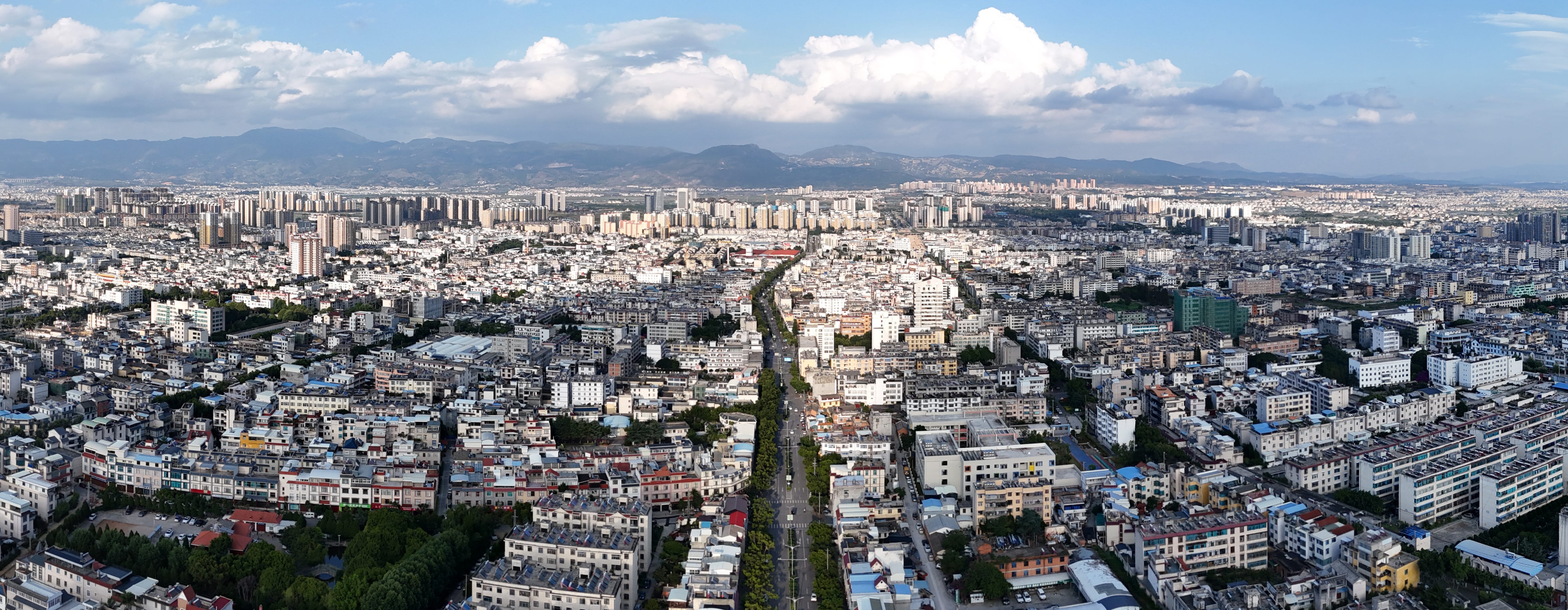
To Fraser’s surprise, Baoshan was a far larger city than Tengyueh, and scores of villages on the far-reaching plain told of a comparatively dense population. Entering by the south gate, they had to walk quite a long way up the broad main street before coming to the place where there were inns. They found a “comfortable inn”, as Fraser called it, with ample accommodations:
It was really more like a barn than a guest room. However, I got a straw brush, swept the worst of the dust off everything and settled down for a few days.
The advantage of an upstairs room was that Fraser could receive callers with some hope of holding an uninterrupted conversation. And not a few came to see him, including Mr. Wang, a silversmith, who invited Fraser to dinner in his shop on the main street and gave him the use of his premises for preaching and bookselling.
On Sunday he left the crowded city and walked a short distance into the country, preaching and distributing tracts. He found this an encouraging new experience in evangelism:
Coming to a couple of men watching cattle near a small stream, I sat down with them and asked, “Have you heard the Jesus doctrine?”
“No,” they answered. “Tell us about it.”
I told them the Gospel story as clearly as I could. They listened well and asked questions. A few passersby stopped and sat down, so I had to begin over again. More and more joined us until I had told the same thing four or five times over and about a dozen people were listening. When the sun came out we moved over to a shady spot under a tree and I went on.
Whether they understood all I was telling them I cannot say, but they listened and were friendly. In getting up once I ripped my Chinese gown, and one of them ran home for a needle and thread and repaired it for me. I preached there for about an hour and a half, then two of them led me to other places where I could find people to talk with.
As I entered the city again in the afternoon a man in a teashop saw me distributing tracts and called me to come in. He gave me a cup of tea and asked to see my tracts. A crowd soon gathered and I preached to them as I had been doing all morning. The man who had called me in seemed fairly well educated, for he read the tracts quite smoothly. He listened to all I said and evidently understood a good deal.
The next two days were as busy as could be, for the silversmith fixed up a stall in his open shop-front behind which Fraser sat on a high stool, hour after hour, surrounded by a changing crowd. Scripture portions, calendars, pictures, and tracts, including translations of Spurgeon’s sermons, were eagerly purchased, and the willingness of the people to hear all he could tell them moved him deeply.
So did the view of the city as he had seen it on Sunday, when he climbed a little hill to rest under a pagoda, looking down upon all of Baoshan for the first time with a burdened heart:
It was a lovely day and I had a clear view of the plain in both directions, as well as of the city. No missionary has ever lived there, and the whole plain, with a population of perhaps 100,000, is without the light of the Gospel. . . . I believe God would be glorified by even one witness to His name amid the perishing thousands of Baoshan. . . .
Back in Tengyueh, he continued writing on this same subject:
It does seem a terrible thing that so few are offering for the mission field. . . . I can’t help feeling that there is something wrong somewhere. Surely God must be wanting His people to go forward. Does not the Master’s last command still hold good? . . . .
As I think of this little corner of the world here in Yunnan, there seems a strange disparity between its huge districts, large towns, unreached tribespeople, waiting for the workers who do not come, and the big missionary meetings at home, the collecting and the subscribing, the missionary pamphlets, etc., etc. And the need is the same, and in some places even greater, in other parts of the world. Hundreds of millions of people have never yet had the Gospel definitely brought before them—and a mere handful of missionaries are sent out from the homelands to evangelize them!
How glad he was to be where he was, with life before him, lonely and discouraging though the work must have been at times.
On the second journey, long days were spent in preaching and bookselling in another district, south of Baoshan and equally unreached. There, unknown to Fraser, a little boy of six got hold of a copy of Mark’s Gospel in its bright, attractive cover. Carried over the mountains to his home in Hsiangta, it was to fall as seed into good ground—but not until years later was the young missionary to find and rejoice in the harvest.
For “the rest of the story” look for the release of the full book later this year!